
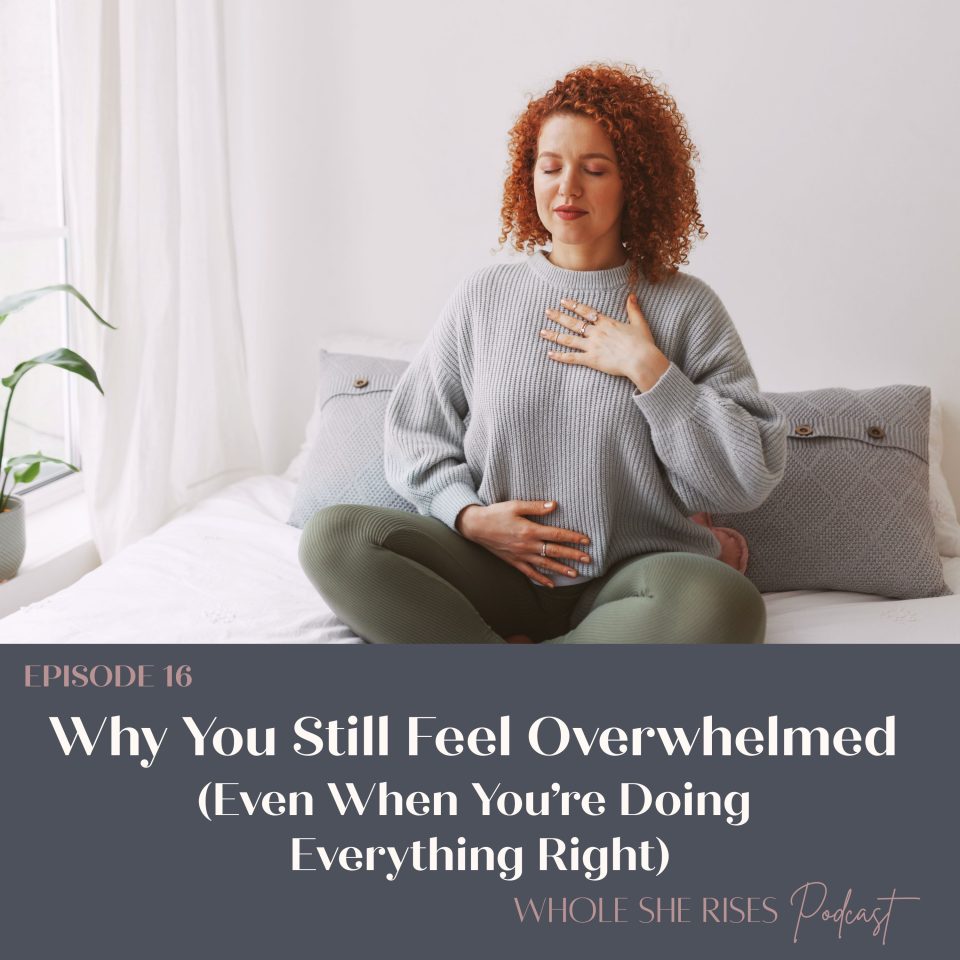
Especially for women navigating perimenopause and autoimmune healing
Have you ever noticed this?
You can do all the “right” things…
The breathing, the grounding, the slowing down…
And in the moment—it works.
But then later…
You’re overwhelmed again.
Reactive again.
Exhausted again.
And it leaves you wondering:
Why does it feel like I keep starting over?
Here’s the truth most people aren’t talking about:
Regulation helps you get through the moment…
But nervous system capacity determines how much life you can actually hold.
And if your capacity doesn’t change,
your baseline doesn’t change.
So today, I want to show you something different—
Not just how to calm your nervous system…
But how to expand it in the way you live your everyday life.
Regulation vs. Capacity: What’s the Difference?
Let’s ground this first.
Nervous system regulation is what you do when your system is activated.
It helps you come back to center when things feel like too much.
But capacity is different.
Capacity is what determines how much life you can experience…
without your system becoming overwhelmed in the first place.
- Regulation is support
- Capacity is resilience
And many women—especially those navigating perimenopause and autoimmune symptoms—have learned how to regulate.
But they still feel like they’re living with a very small window.
Like it doesn’t take much to feel thrown off.
That’s not a failure.
It simply means your nervous system capacity hasn’t had the chance to expand yet.
And when capacity stays limited…
life keeps feeling like too much.
Where Nervous System Capacity Is Actually Built
This is where we gently shift the way you think about healing.
Capacity is not primarily built in your hardest moments.
It’s built in your everyday life.
The in-between moments.
The ordinary moments.
The quiet moments where nothing is necessarily wrong.
Because your nervous system is always taking in information.
It’s always asking:
- Is this safe?
- Is it safe to stay here?
- Is it safe to feel this… without needing to rush out of it?
And how you meet those moments…
That’s what begins to expand your baseline over time.
Not intensity.
Consistency.
How to Build Nervous System Capacity in Daily Life
This is where it becomes practical.
You don’t need to add more to your plate.
You simply begin to shift how you move through what’s already there.
1. Morning: How You Enter the Day
Most people wake up and immediately spike their system.
Checking their phone.
Running through their to-do list.
Jumping straight into doing.
But your body hasn’t even had a moment to arrive yet.
Instead of creating a perfect morning routine, try asking:
Can I enter my day… instead of being thrown into it?
Simple ways to support your nervous system in the morning:
- Sit up in bed and take 3 slower breaths before standing
- Let your eyes adjust to the room instead of reaching for stimulation
- Place a hand on your chest or stomach for grounding
You’re not trying to be perfectly calm.
You’re just teaching your body:
I can start my day without urgency.
2. Transitions: Where Most Dysregulation Happens
This is one of the most overlooked places in nervous system healing.
The moments in between things.
- Work → home
- One task → the next
- Being alone → being needed
Most of us don’t transition…
We carry everything with us.
And it stacks.
This is how chronic stress builds—even when nothing feels “that bad.”
Capacity is built when you begin to complete moments.
Try this:
- Pause for 30 seconds before switching roles
- Take one breath with a longer exhale
- Say (in your mind or out loud):
“That moment is done. I’m entering the next.”
You’re teaching your body:
I don’t have to carry everything all day.
Even small shifts help:
- Sitting in your car for 2 minutes before going inside
- Taking a few quiet breaths after a stressful meeting
This is how you stop stacking stress in your body.
3. Evening: How You Come Down Matters
If your system never fully comes down…
your capacity doesn’t expand.
It just keeps running… until it crashes.
Instead of immediately distracting or pushing through,
try giving your body space to land.
Simple evening practices:
- Sit for 2 minutes without input (no phone, no TV)
- Let your body feel that the day is over
- Ask yourself:
What is still here in my body?
Not to fix it.
Just to notice.
Capacity grows when your body learns:
I don’t have to escape myself to feel okay.
Small Shifts That Actually Change Your Nervous System
This is the part that changes everything.
It’s not the big things.
It’s not doing more.
It’s these small, consistent moments where you:
- Stay a little longer
- Soften a little more
- Don’t rush yourself out of what you’re feeling
This is how your window of tolerance expands.
This is how your baseline begins to shift.
And this is how life starts to feel different…
Without you needing to control everything around you.
If You Still Feel Overwhelmed… This Might Be Why
If you’ve been doing the work…
Using the tools.
Trying to support your body.
But still not experiencing the shift you want—
This might be the missing piece.
Not more protocols.
Not more effort.
But learning how to live inside your body differently throughout your day.
Ready for Deeper Support?
This is exactly what we begin to do inside my Back In Control Session.
We don’t just regulate your nervous system in the moment—
we begin expanding your capacity…
So you can feel:
- more steady
- more clear
- and more like yourself again
Final Thought
You’re not starting over.
You’re building something deeper.
And it’s happening in the smallest moments…
more than you think.
Let’s rise… together.